After three years of quiet engineering, every Tracket app now reads from and writes to one canonical record per customer. Here's why we rebuilt the foundation, what changes for you, and what's coming next.
When we shipped Tracket CRM in 2019, we made a quiet bet: that small businesses would rather pay one bill than fourteen. That bet held. By 2024 we were 60+ apps and 18,000 paying companies. But underneath, every app still kept its own copy of the customer.
One record, not nine
Before Atlas, a customer named "Maple Logistics" might exist as nine slightly different records — one in CRM, one in Books, one in Desk, with subtly different field values and no canonical link between them. We had reconciliation jobs. They worked. They were also slow, lossy, and required engineers to debug.
If two apps store the same fact, one of them is wrong.
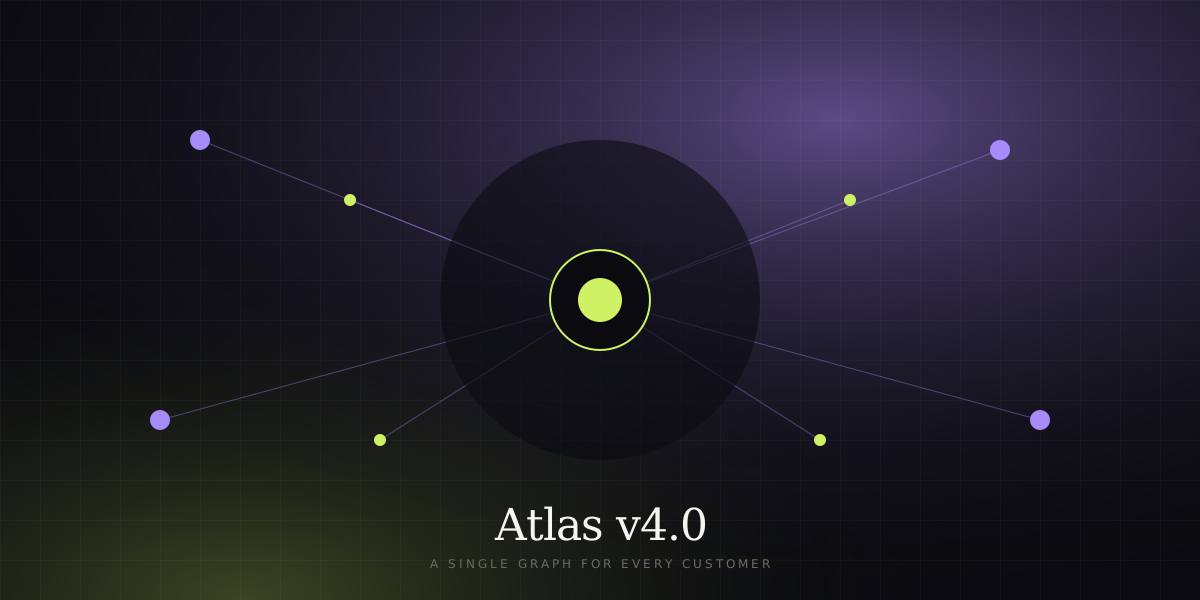
Atlas is a single entity store that every Tracket app reads from and writes to. There is one customer record. There is one contact record. There is one deal, one invoice, one ticket — and they all reference the same customer by the same ID, in the same shape.
What changes for you
If you're an existing Tracket customer on v3.x, you don't need to do anything — we migrated your data behind the scenes over the last six months, and you'll see the new merged records the next time you sign in. There's a one-time cleanup wizard for anything ambiguous; most teams finish it in under 20 minutes.
If you're new: open any record and you'll see a full timeline, drawn from every app in the suite. Sales sees the support tickets. Finance sees the deal. Ops sees the timesheet. There's no integration to configure because there's nothing to integrate.
What's next
Atlas is the foundation, not the destination. Over the next four quarters we're rebuilding workflows, reports, and AI assistance on top of it. Expect smarter dedupe suggestions, cross-app automations that previously required custom code, and dashboards that aggregate facts across domains without batch jobs.
Three years is a long time to build a thing nobody asked for explicitly. We're glad we did. Thanks for waiting.